Showing posts with label contemporary fiction. Show all posts

Tuesday, May 2, 2017


Amish Brides by Jennifer Beckstrand, Molly Jebber, Amy Lillard -- Under bright blue skies, wedding bells ring--fulfilling sweet dreams, impossible wishes, and joyous new beginnings among these three new stories. (Contemporary Romance from Kensington Publishers) 

More in-depth descriptions of these books can be found on the ACFW Fiction Finder website.

Contemporary Romance:


Sprouts of Love by Valerie Comer -- An overzealous community garden manager delivers more than the food bank manager can handle. Can love sprout amid the tsunami of vegetables? (Contemporary Romance, Independently Published)  


Summer Dreams by Delia Latham -- God's love...reflected in the waters of the Pacific, and in the eyes of a young couple who walk its moonstone shores. (Contemporary Romance from White Rose Publishing [Pelican])  
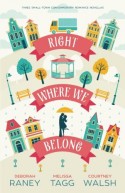

Right Where We Belong by Deborah Raney, Melissa Tagg, Courtney Walsh -- Three sweet stories of small-town romance by three tried-and-true authors. Whether in a quaint home bakery in Langhorne, Missouri, a cozy boho coffee shop in Maple Valley, Iowa, or a charming lakeside cottage in Sweethaven, Michigan, love grows best in small towns just like this! (Contemporary Romance, Independently Published)  
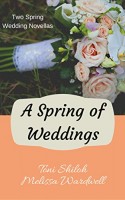

A Spring of Weddings by Toni Shiloh and Melissa Wardwell -- Two Spring wedding novellas, "A Proxy Wedding," and "Hope Beyond Savannah." (Contemporary Romance from Celebrate Lit Publishing)
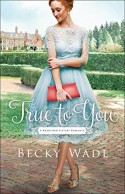


 True to You by Becky Wade -- Former Navy SEAL John Lawson hires genealogist Nora Bradford to help him to uncover the identity of his birth mother. As they work side-by-side, this pair of opposites begins to suspect that they just might be a perfect match. (Contemporary Romance from Bethany House [Baker] Publishing)


Cozy Mystery:
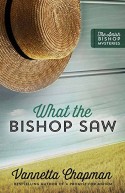
What the Bishop Saw by Vannetta Chapman -- A fire blazes out of control in the San Luis Valley of Colorado, leaving an elderly, Amish bachelor dead. Bishop Henry Lapp rushes to the scene, and he learns the fire was no accident. When the police point the finger at a suspect Henry knows is innocent, the bishop must decide whether or not to use his mysterious, God-given gift—one he's tried desperately to ignore all these years—to try and set the record straight. (Contemporary Romance from Harvest House Publishers)
General Contemporary:

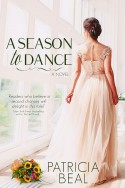
A Season to Dance by Patricia Beal -- The heart wrenching love story of a small town professional ballerina who dreams of dancing at the Met in New York, of the two men who love her and of the forbidden kiss that changed everything. (General Contemporary from Lighthouse Publishing of the Carolinas)  
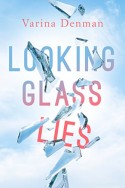

 
Looking Glass Lies by Varina Denman -- A poignant and relatable novel, Looking Glass Lies captures the war women wage against themselves, and the struggle to see beauty reflected in a mirror not distorted by society’s unrelenting expectations. (General Contemporary from Waterfall Press)

Historical:
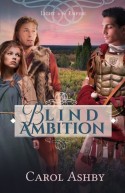


Blind Ambition by Carol Ashby -- What began as a bored man's decision to try a different road turns into an emotional and spiritual quest that changes the direction of his entire life. (Historical from Cerrillo Press)  
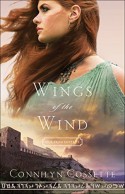


Wings of the Wind by Connilyn Cossette -- A broken and bitter Canaanite woman dresses as a man to fight against the invading Hebrews, never expecting that she would live to be captured and married to one of her enemies, and certainly not to find love and healing among the very people who killed her family. (Biblical/Historical from Bethany House [Baker] Publishing)


Historical Romance:
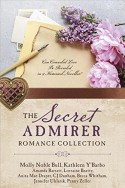
The Secret Admirer Romance Collection by Amanda Barratt, Lorraine Beatty, Molly Noble Bull, Anita Mae Draper, CJ Dunham, Jennifer Uhlarik, Becca Whitham, Kathleen Y'Barbo, Penny Zeller -- Shy expressions of love lead to nine historical romances. Declaring one’s love can be hard--even risky--especially when faced with some of life's greatest challenges. (Historical Romance from Barbour Publishing)  


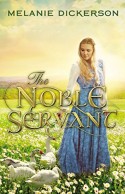
The Noble Servant by Melanie Dickerson -- She lost everything to an evil conspiracy . . . but that loss may just give her all she ever wanted. (Historical Romance from HarperCollins Christian Publishing)  


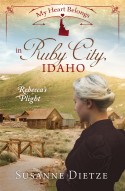
My Heart Belongs in Ruby City, Idaho: Rebecca's Plight by Susanne Dietze -- It’s a mail-order disorder when newlyweds realize they've married the wrong partners with similar names. An annulment seems in order--and fast. But when the legalities take longer than expected, Rebecca Rice wonders if Tad Fordham wasn’t the right husband for her all along. . . . (Historical Romance from Barbour Publishing)  
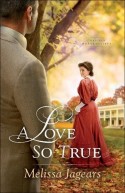
 
A Love So True by Melissa Jagears -- They begin with the best of intentions, but soon the complications pile up and Evelyn and David's dreams look more unattainable every day. When the revelation of a long-held secret creates a seemingly insurmountable rift between them, can they trust God still has a good plan for them despite all that is stacked against them? (Historical Romance from Bethany House [Baker] Publishing)  

Road to Harmony by Sherry Kyle -- When Jonas returns to Harmony, Elena's heart is torn between her secret love, and the storeowner her parents hope she marries. (Historical Romance, Independently Published)
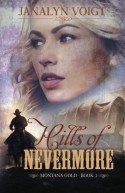


 Hills of Nevermore by Janalyn Voigt -- Can a young widow hide her secret shame from the Irish preacher bent on helping her survive? (Historical Romance from Mountain Brook Ink)


Romantic Suspense:
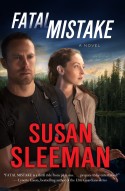
Fatal Mistake by Susan Sleeman -- Each day could be her last...but not if he can help it. An FBI agent must protect the woman who can identify a terrorist bomber in bestselling author Susan Sleeman's riveting romantic suspense novel. (Romantic Suspense from Faith Words [Hachette])

Tuesday, December 2, 2014

Christmas is coming. It’s a great time to share a cherished recipe. This recipe won’t replace green bean casserole or orange cranberry relish, but it’s helped me become a better writer and it can help you, too. My goal for each novel is that it should be better than the one before. That’s why I hope you will read my latest novel, The Bachelor, book two in my Plain City Peace series. 
 
Before I write, I work up an appetite by reading. Read many styles of writing, not just your favorites. You can learn great techniques from other authors. If you read library books, you can brush up on reading free of charge, yet the payoff will be huge. I believe reading is the single most important ingredient in this recipe, aside from trusting the Lord. Reading helps you soak up grammar, spelling, style, flow, dialogue, and setting. 
Write the kind of book that makes you smack your lips and beg for seconds. I love to read stories based on real people, so that’s the kind of books I write. As a Christian, I believe the Lord inspires me to write the way I do and He will inspire you to write in a certain way, too. Look at the Bible; there are many writers, many styles, and many subjects, yet the Lord inspired every one. The Lord has planned your writing career since the beginning of time, and He’s been leading you by enriching you as a reader.
As you write, remember the most important person: your hungry reader. Do you like it when a mystery writer holds back on clues? Or how about when you find a mistake in a non-fiction book? When a novel is filled with boring characters, do you keep reading? How disappointing to sit down for a feast and then leave the table hungry. Good writing is not throwing together random ingredients like you’re trying to get food on the table by 6 o’ clock sharp. It is assembling all the best ingredients with love and improving your work by fixing mistakes, like timeline problems or character eye color. Trim away the fat! When you revise your writing, you show that you care about your reader. Your writing is not done until it’s well done.
Don’t invite company over when you try out a new dish. Before you serve up your writing, do a taste test. Trade your work with a trusted writer friend or two. Don’t be shy. Critique partners can make helpful suggestions on how to fix something you may have missed (and trust me—you missed something). If you trade with someone who seems harsh, pray for wisdom on how to proceed. I have two critique partners who read my manuscripts, and I do the same for them. For you writers who aren’t published yet, revising can take as long as you like, and it can even be fun. Once you have a contract, however, edits take on a time element. Revising according to an editor’s suggestions by deadline can be stressful, like unexpected company’s coming and you need dinner on the table ASAP. Ultimately, it’s your recipe, your story, but sometimes it’s nice to have a little help. Try to think of your editor as a sous chef who makes sure all the ingredients are prepped and ready to add at the critical moment.  
Feel free to take my suggestions to your test kitchen and try them out. And don’t forget—all the best cooks add their own flourishes to tried and true recipes. One last tip: ask the blessing before you serve your readers. It won’t be long before readers will relish what you write.
  
Stephanie Reed lives on the outskirts of Plain City, Ohio, site of a once-thriving Amish community. She gleans ideas for her novels from signs glimpsed along the byways of Ohio, as she did for her previous books, Across the Wide River, The Light Across the River, and The Bargain. The Bachelor is the second book in the Plain City Peace series.  


Tuesday, November 4, 2014

Family legends are precious. Parents caution children with tales of wayward aunts and cousins. They inspire budding talent with accounts of Grandma’s life on the vaudeville stage, and encourage resilience with stories of ancestors who pulled covered wagons over snow banks to start new lives in the golden West. Stories like these bond families together over generations. And if you have a writer in the family, they may pop up in a memoir or a novel.

Both of my novels contain the stuff of family legends. If you want to work a time honored story into your writing, here some points to consider.

Feel free to take liberties. Your account does not need to be told exactly as you heard it. It does not need to align to how others remember it. Allow the legend to serve the story you are writing. You are after emotional truth, not historical accuracy.  I’m writing a novella based on ancestral stories I heard from family members, source material I inherited, and genealogy I’ve researched. I want to include a bizarre tale of a trolley accident and a miraculous healing that is legend in my family.  There are numerous gaps in my knowledge of certain facts, so I’m inventing some of the details. That’s what fiction writers do. 

Consider how other family members might respond. How much consideration you give to friends and relatives who may have a different take on the family legend is highly personal. Frankly, I decided to wait until older family members who would have been offended passed away. I did not want to damage family relationships or feel restricted from telling the story the way I chose. Now, my close family is just as intrigued as I am to release the black sheep from their pens and let them have their say. 

Treat your legendary characters with respect. Families often have whipping boys, an ancestor who gets blamed for every negative character trait that turns up through the generations. By all accounts, my great grandmother was one tough customer. On the face of it, she abandoned a marriage, put her career ahead of her children at a time when most women did not work, and used her high intelligence, quick wit, and acerbic tongue to make life miserable for my mother. How I wish I had asked the questions that might have provided a more balanced picture (or not), but we don’t think to probe until it’s too late. Rather than perpetuating a family tradition to vilify, try seeing the legend from a different point of view. Our legend is not clear on what prompted great grandma to leave her husband and go to work. Therein lies a story. 


Do you have a family story that wants telling? Tell it with creativity, love, and respect and you have a jar of preserves spiced just right to appeal to a reader’s taste, and one that will last in a family’s memory. 

Sydney Avey lives in the Sierra Nevada foothills of Yosemite, California, and the Sonoran Desert in Arizona. She has a bachelor’s degree in English from the University of California, Berkeley, and a lifetime of experience writing news for non profits and corporations. 

Buy links:

The Lyre and the Lambs by Sydney Avey on Amazon. ISBN 978-1-

938708-31-2 (paperback), ISBN 978-1-938708-33-4 (ebook).


The Sheep Walker’s Daughter on Amazon. ISBN 978-1-938708-19-

0 (paperback), ISBN 978-1-938708-20-6 (ebook). ISBN 978-1-

938708-30-5 (audiobook). 


Contact links:


Tuesday, October 21, 2014

Is there anything more painful for an author than to hit the ‘Delete’ button?  We’ve given life to our characters, created scenes that we know are perfect, and bled onto the pages.  How in the world can an editor see what we can’t and insist that some pages—maybe even entire scenes—need to go? The horror.

But if you’re in the game long enough, it will eventually happen.  My latest release, The Promise, was a literary endeavor that was way out of the box for me, and as such, my editor set the bar really high.  I was crossing genres, and she wanted a really tight story that popped on every page.  But I initially had a mental block while writing the book.

The Promise is inspired by a true story, and I knew that once my character got on a plane to head to Pakistan, all of the real-life events would come hurdling back at me, taking me back to a time that was painful and scary.  So, I prolonged putting my character on the plane.  Instead, I sent a secondary character cross-country, filled the pages with a bit of fluff, and basically wrote about a hundred pages that didn’t help to further the story, but caused it do drag.  In the end, it was delete, delete, delete.  

So, is there an upside when this happens?  At the time, it’s hard to see one.  But looking back, there was a silver lining.  Perhaps the reader didn’t need those hundred pages, but I did.  It was an opportunity to get to know my characters.   In that regard, I can’t consider it wasted time and effort.  

Have you ever written a letter and not sent it?  Maybe it was just for you, a way to vent, part of a healing process, or an incentive to forgive.  Sometimes, deleted scenes end up in the same ‘File 13’ as other projects that weren’t really for anyone else’s benefit, except our own.  

In the scene that never made it into The Promise, I felt like I was sitting in the backseat while my character drove to New York City.  I learned a lot about him, his motivations, hopes, and dreams.  I was a silent player in my own book, watching and learning.  In hindsight, these tidbits weren’t anything that the reader needed to know, but the journey enabled me to incorporate the emotions my character was feeling through other ways that drove the story forward.  

At the end of that trip to New York City, Tate and I parted ways, and I returned to my computer to hit the delete button.  But, we had that time together, and I returned from the adventure with a much better understanding about who Tate really is.  

As authors, we must realize that even the deleted scenes serve a purpose.  As readers, we appreciate when an editor or author has gone the extra mile to keep any unnecessary filler out of the book.

As a reader, how many times have you skimmed sections of books that really should have been deleted or shortened?  And author friends, as painful as the deleting process is, has it benefitted you in ways that I mentioned?


Beth Wiseman is the best-selling author of the Daughters of the Promise series and the Land of Canaan series.  Wiseman has a deep affection for the Amish and their simpler way of life, and while she plans to continue writing Amish love stories, she is also branching out into other areas. In her daring new novel, Wiseman jumps way outside the box. The Promise will take readers far away from Amish country and the small Texas towns of her previous releases to a dangerous place on the other side of the world.  Inspired by actual events, Wiseman believes this is the book she’s been working toward for a long time.  


Wiseman can be found at Fans of Beth Wiseman on Facebook where she interacts with readers. Learn more about the author and her books at bethwiseman.com and on Twitter (@bethwiseman).

Wednesday, October 8, 2014

Chapel Springs RevivalChapel Springs Revival by Ane Mulligan
My rating: 5 of 5 stars

Debut author Ane Mulligan has developed a story of a small town that contains a cast of quirky citizens. Claire and Patsy, the two main characters, are fun and charming--you'll wish they were your friends! Enjoy this heartwarming story of two bff's whose imaginations run amok when they suspect their respective husbands are losing interest in the "til death do we part" promise of their wedding vows.

A great read for these cool autumn days!


Buy at Amazon or Barnes and Noble

Tuesday, September 16, 2014

Contrary to popular belief, backstory is a good thing. Now, before y'all call for a lynching party, let me tell you what it' good for and what it's not good for. After all, backstory helps you, the author know your character. What makes her tick? What formed her worldview? Why does he dislike women who have a good business head? 

Let's get the "not" out of the way first. The reader does not need to know the backstory of your characters to understand the plot—at least not in the beginning. A bit of mystery about the character is a good thing. It draws the reader onward to find out why this otherwise nice guy is so antagonistic to the heroine.

I always tell new writers to think of it this way. You're attending a party, and you host introduces you to a new neighbor. You start off the conversation by telling her your life history, and the new neighbor will be in jeopardy of whiplash, looking for the host to rescue her. 

Readers who are bombarded with backstory in the first few chapters of a novel with either ski over it or close the book for good. Either way, your time has been wasted by putting it in.

Now, let's look at what backstory is good for and how to discover it. First, I conduct a character interview (CI). Think of that as a journalist interviewing a subject for an article. In my CI, I dig and prod for the character's secrets and for his or her fears. What happened in their childhood that had a major effect of them?

After I've completed the CI, I write a stream of consciousness (SOC) backstory. This is where I go back two or more generations. People are the product of their ancestors' worldview. For example, let's say your great grandparents lived through the Great Depression. They probably could get more for a quarter than anyone you know. They taught your grandparents, who taught your parents. But did your parents continue that trait or did they, because of their more affluent status, break away from it?

It's within the SOC backstory where I discover so much about my character. Besides their worldview, I learn the lie they believe about themselves, and that lie will color their motivation, and that motivation will drive their plotline. 

In my debut novel, Chapel Springs Revival, my secondary lead, Patsy, comes from a loving home. Her mother is a well-known artist and her father a country doctor. She grew up without them around a lot. One might think her lie is that she's unloved, but that wasn't it. Patsy believes she's helpless – powerless to fix things. In her own life, she falls victim to it by ignoring problems. If she doesn't acknowledge it, it doesn't exist. 

Your characters will either fall victim to their lie or they will try to prove it wrong. Remember, the key is: Lie drives motivation drives plotline.

Much of what I learn never makes it into the manuscript, but if makes the characters come alive. They're three-dimensional and when they are real to you, the author, they become real to the reader. 

One of my beta readers said after reading Chapel Springs Revival, "I love the people. I want to find out more about their lives."


And that's the goal for backstory. 

While a large, floppy straw hat is her favorite, Ane has worn many different ones: hairdresser, legislative affairs director (that's a fancy name for a lobbyist), drama director, multi-published playwright, humor columnist, and novelist. Her lifetime experience provides a plethora of fodder for her Southern-fried fiction (try saying that three times fast). She firmly believes coffee and chocolate are two of the four major food groups. President of the award-winning literary site, Novel Rocket, Ane resides in Suwanee, GA, with her artist husband, her chef son, and two very large dogs. Her debut book, Chapel Springs Revival released Sept 8th.


Monday, September 1, 2014

As an author, I’ve attended many conferences and sat through a ton classes on the craft of writing. And while the courses taught a variety of topics, all of which were extremely enlightening and helped me grow in my craft, one theme seemed to rise throughout each one—a niggling concept or message that dug intentional talons into my heart and held on tight. 

That theme was “write what you know.”

That theme has been argued before, of course. Because, technically, that message would mean that you could never write a romantic suspense story with a policeman hero if you, yourself, were not a policeman. That message would mean that you would never be able to write about a an astronaut if you’ve never been to space, or a race-car driver, or a military vet, or a doctor, or a lawyer if you had never driven race cars, manned the front lines in combat, earned a tough degree or passed the Bar. 

And very unfortunately for me, that would mean I would have never been able to write about a female baker longing to break free of her small town, average-flavored life and make it big in the culinary world, because—ahem—I can’t bake to save my life. Oh sure, I can whip out a Pillsbury roll of cookie dough with the best of them, but when it comes to creating unique cupcake delights like my heroine Kat Varland, my expertise definitely lies more in the “taste testing” field.

So how can an author write what they know, if they don’t know all of these different careers and venues? 

I believe, while the message is taught with good intentions and is really more of a prod to thoroughly research your stories before hitting “send” to your editor, that it’s really more of a nod to the author’s heart. 

I write inspirational fiction, which means all of my stories have a subtle faith theme throughout. Therefore, my characters are filtered through my own Christ-centered worldview. And my experiences in my faith and in my walk with Christ are going to be evident, more or less, in one way or another, through my character’s faith walk in the story. 

How can I honestly write a story with a deep-rooted theme of forgiveness if I’m harboring grudges in my own life? How can I successfully pen a novel with a message of restoration if I’m fighting negativity and depression in my thoughts? How can I offer a legit source of joy and hope to my readers if I’m secretly at my keyboard, hopeless and afraid?

I can’t. I have to write what I know.

So for me, that means doing the research not just for my story’s plot, but for my character’s hearts. What internal conflict will they overcome? More than likely, it’s going to be one I’ve recently overcome or am learning to overcome right along with them. 

The characters in my new release All’s Fair in Love and Cupcakes both learn some hard-earned lessons in sacrifice. Heroine and cupcake baker Kat Varland must learn how to shake off her insecurities and fears and set free her dreams while trusting that the ultimate Dream Giver (God) has her best interest close to His heart. She has to believe that He can turn even her most average-flavored dream into one bursting with color and sweetness. And hero and high school football coach Lucas Brannen must discover that sometimes, letting go and surrendering his own perfect play gives God the opportunity to call a surprise play that lands the ultimate victory. 

While writing this story, I had to learn similar lessons. Like Kat, I had to learn to let go of my shattered dreams and the insecurities holding me back, and believe in a better future. And like Lucas, I had to learn that surrendering what I’m holding so tight actually stifles and crushes it, rather than controls it. There is freedom in sacrifice and in letting go—and there is reward to obedience. 

And that is why I will always strive to write what I know. 

Betsy St. Amant has a heart for three things – chocolate, new shoes and sharing the amazing news of God’s grace through her novels. She lives in Louisiana with her adorable story-telling young daughter, a collection of Austen novels, and an impressive stash of Pickle Pringles. A freelance journalist and fiction author, Betsy is a member of American Christian Fiction Writers and is multi-published in Contemporary Romance. When she’s not reading, writing, or singing along to the Tangled soundtrack with her daughter, Betsy enjoys inspirational speaking and teaching, and can usually be found somewhere in the vicinity of a white-chocolate mocha.

@betsystamant


Tuesday, June 24, 2014

I recall a vocal coach remarking that as a singer part of her was continuously thinking of, preparing to, or actually singing. The same holds true for me as a writer. In my mind, I’m always writing. I’ve dabbled in many of the arts—painting, sculpture, singing, photography, and dance, but only writing fiction has grabbed hold of me and won’t let go. Not that I want it to. I love the English language and writing is my greatest pleasure!

I’ve always had what some grown-ups call an overly active imagination and I continue to play make-believe. As I navigate my day I find myself pondering new ideas for novels or musing over a blog piece I need to write. Tackling the mundane duties of life, in the grocery store, I might notice a couple either infatuated with each other or arguing, and create a storyline to incorporate them. While weeding in my garden or doing laundry, ideas transport me from my ho-hum chores and convey me to exotic locations where I meet fascinating fictional people of my making. Writing in my head makes all activities fun.

I love to read fiction in bed at night. My eyes examine each sentence with curiosity and admiration if I’ve discovered an accomplished author or characters who have caught my fancy. Delving into non-fiction, I might glean knowledge I’ll use later, including Biblical passages or a verse that hits home. I underline and circle words and sentences, jot notes in the margin, and sometimes turn around and reread an entire novel, using it as a textbook. I am always striving to improve my craft. 

My written stories, with all their twists and turns, continue to meander through my brain, even after the final edit and my novel has been published by David C. Cook, so there’s no going back. The characters of my recent novel Forever Amish, the third in The Legacy of Lancaster Trilogy, travel with me as dear companions. Sometimes I must remind myself that it's time to move on and let my readers meet them and evaluate what I hope is a captivating and unique story.           

Author Kate Lloyd, a native of Baltimore, spends time with family and friends in Lancaster County, PA, the inspiration for her bestselling novels Leaving Lancaster and Pennsylvania Patchwork. Forever Amish, the third novel in the Legacy of Lancaster Trilogy, released June 5th, 2014.

She and her husband live in the Pacific Northwest, the setting for Kate’s first novel, A Portrait of Marguerite. Kate studied art and art history in college. She’s worked a variety of jobs, including car salesman and restaurateur.

Learn more about Kate Lloyd on her website: www.katelloyd.net and her blog: http://katelloyd.net/blog/ 

Like her on Facebook: www.facebook.com/katelloydbooks 


Follower her on Twitter: @KateLloydAuthor and Pinterest: @KateLloydAuthor

Tuesday, May 27, 2014


Everyone is different, and every writer is no exception. When I started writing my first book in 1993, I heard about writing voice and writing process, not really understanding what either meant. By the time I completed my fifth book and signed with my first agent in 2007, I not only knew exactly what writing voice is, but I’d found mine and it was well developed; plus, I’d learned various types of writing processes from countless authors through the years. While those authors explained details on their writing process, I knew it wasn’t the only way to write fiction, even though it often sounded that’s what those authors were saying. Many things about the publishing industry and writing fiction can confuse new and inexperienced writers.   

Even the plotter vs. panster techniques can be misleading, suggesting a writer is either one or the other. I’m definitely a panster (write by the seat of my pants), but that doesn’t mean I’m never a plotter, and that’s okay – I allow my muse to work the way it wants when it wants. No restricting rules; my muse is in control.

POV is one of the biggest topics I’ve found writers debate with strong conviction, suggesting there’s only one way to correctly write POV. I’ve read excellent books by successful authors who are: 1) POV purists 2) POV non-purists 3) POV head hoppers, and 4) Everything in between. Some authors’ method of writing POV can differ from book to book, making each new book of theirs unpredictable and fresh. Obviously, there’s multiple ways to write POV. What works for one writer, doesn’t work for all writers. Similarly, what doesn’t work for one writer doesn’t make it the incorrect way to write it. As a reader, I want an enthralling story with fascinating characters within a well written book that I don’t want to put down, even at two o’clock in the morning. The details on how it’s written, including POV, are up to the author’s unique imagination and individual style. I’m a POV non-purist; meaning, regardless if it’s at the end of a chapter/ scene or smack in the middle of one, if it’s best for the characterization/scene/story, etc. to change the POV, then I change the POV exactly where it’s best to do so. However, I focus on writing that change with clarity and an easy flow transition.            

So, in 2007 after years of learning varied types of writing processes, reading countless novels, and writing my first five books, I developed my own writing process – the one that works for me based on trial and error.    

My writing process: 

On a daily basis, and without any effort or cognizant thought on my part, opening scene ideas simply pop into my brain. These “situations” (always suspense in nature) play out in my head as naturally as my respiratory system inhales and exhales. However, I jot down the ideas for future use since I’m always writing my next book, working on copy edits and galleys on my upcoming release or marketing my current release. Sure, story ideas are plentiful for me, but not all of them are strong enough for a 400-page suspense novel, and some of them I forget before I even have the change to write them down (at times I’m out doing something adventurous and not able to jot it down).

When it’s time to turn one of those jotted down “situation ideas” into a book, I allow my writer brain free-rein to write that first scene then the rest of the book. I write and write, focusing mostly on action and dialogue (think: screenplay), until I have a full rough draft. After I’ve completed that full first draft, I decide the GMCs (Goal, Motivation and Conflicts of all main characters) and the plot points, then I integrate those into the manuscript via deep revisions. Also via deep revisions, I flesh out characterization, add description and research. Then I read the entire manuscript and improve on everything that needs revising. I let it sit for several weeks, allowing the story and characters to ferment in my mind for further revisions. After I revise again, I send it to all my critique partners and beta readers. Once I receive it, I read through the insightful input all my critique partners and beta readers supplied me. I heavily revise. Finally, I polish: I print out the entire manuscript, read every word on every page and revise anything necessary.  

My writing process isn’t that rigid, and I revise more than I stated above, but you get the general idea. Every writer is so different. If you’re a writer, what process works for you? If for whatever reason your process isn’t working and you’re struggling, try other methods until you find what does work for you. If you never give up trying, you eventually will find your unique and individual writing process. 

For details on what led me to write that first book in 1993, visit my WRITING page on my website: www.diannatbenson.com   


After majoring in communications and a ten-year career as a travel agent, Dianna left the travel industry to earn her EMS degree. An EMT and a Haz-Mat and FEMA Operative since 2005, she loves the adrenaline rush of responding toA medical emergencies and helping people in need. 
Dianna lives in North Carolina with her husband and their three children. Final Trimester is her second release. 


Her releases are available wherever books are sold. Below are the links to Final Trimester at the three largest booksellers: 


Tuesday, May 6, 2014


A few weeks ago, another author asked me if I had a story to tell about the role dreaming plays in a writer’s career. Do we keep pursuing a writing dream no matter what? Is dreaming for dreamers only, or is it part of a writer’s toolbox? 

Like many aspiring writers, I had a dream agency and a dream agent in mind years ago. I’d watched the way the agent conducted herself at conferences, in business settings, and in social settings. Her responses to questions on agent panels were always from a perspective that positively dripped with wisdom and grace. But her client list was full—the bane of many an excellent agent. I waited…and watched other agents. But the dream for that particular agent and working within the highly desirable community of that agency wouldn’t go away. 

For our 35th wedding anniversary trip, my husband chose Alaska. I wanted to vacation in the tropics. When I discovered a writers’ conference connected with an Alaskan cruise, it seemed to symbolize 35 years of marital compromise! I didn’t know at the time we registered that my dream agent was celebrating her 35th anniversary on that same cruise.

The agent and her husband were not onboard for the conference. They were true tourists. But she graciously agreed to take a handful of appointments one afternoon. She listened to my pitch and said something like, “Interesting. Now, let’s see if you can write.” Her client list was still full, but she invited me to submit a proposal.

A year later (2008) she still had no openings. I prepared to attend the annual ACFW (American Christian Fiction Writers) conference, wondering if it was time to give up my dream agent. Was God asking me to pursue another path? I wondered if He was even asking me to lay down the idea of writing fiction at all. I’d been working at it seriously for six years with no book to show for it. I told Him, as sincerely as I could, “Lord, if this pursuit isn’t from You, I will set it aside.” 

It seemed a moot point if I was about to turn away from fiction to other writing interests, but I emailed my dream agent and said, “I need to know if there’s any hope of signing with you so I know how to direct my energies at the conference.”

Her response? She called me to say, “I don’t know what to do with you.” It’s not exactly what I hoped to hear, but it wasn’t “No.”

She may not remember the conversation, but I recall every word. “You’re a good writer, but I promised myself I wouldn’t take on any more unpublished novelists. Go to the conference and look for another agent. If no one snatches you up”—I chuckled at that line, too—”call me after the first of January and we’ll see if I’ve had any client slots free up.”

I knew I had to be obedient to God and do due diligence. So I requested an agent appointment and an editor appointment at the conference. The agent appointment went so horribly, I was certain God was directing me to give up fiction forever. But I danced out of that appointment because I knew I’d just been shown who I shouldn’t work with as my agent. 

The editor appointment went shockingly well. Goosebump well. I had a request for the proposal. The dream stirred. What if God didn’t want me to lay aside the dream of fiction writing, but plunge deeper in? 

I sent the proposal (still wondering if I was days away from walking away from fiction), and within two hours received a response from the editor who asked for the whole manuscript. Within a month, the editor was taking the project to committee.

It seemed appropriate to call my dream agent and inform her about the development. Her words? “We’d better get you signed up then!”

My dream agent has become a dream friend and invaluable partner in this amazing journey. Days away from surrendering fiction, I signed my first contract. In May of 2014, my eighth book releases—All My Belongings, which received a starred review from Publishers Weekly—with three more novels contracted. “So far,” she said, dreamily.

Where do dreams fit in the life of a writer? For me, it seems God won’t let me pick it up and run with it unless I’m first willing to lay it down.

~~~~~~~~~~~~~~~~~~~~~~~~~~~~~~~

Cynthia Ruchti tells stories of Hope-that-glows-in-the-dark through her novels, novellas, devotions, nonfiction, and through speaking events for women and writers. Her novels have been recognized with honors from RT Reviewers’ Choice, Retailers’ Choice, Family Fiction Readers’ Choice, and others. Her debut novel was a 2010 Carol Award finalist. All My Belongings is her newest release, the story of a young woman who discovers a new life and new identity can’t protect her from a past that refuses to go away.  


Learn more about Cynthia Ruchti and her books at www.cynthiaruchti.com. Readers can also become a fan on Facebook (cynthiaruchtireaderpage) or follow her on Twitter (@cynthiaruchti).  

Tuesday, April 22, 2014

Outside, strobes atop the police cars spilled red and blue over the figures huddled on the lawn. 
From the front window, the lights of the Christmas tree cast multicolored reflections on the snow. 
Inside the house, red bows and green garlands adorned the mantel of the living room. That color scheme continued in the tattered green coat the man on the floor wore and the darkening red stain that spread from the knife handle protruding from his back.
Dr. Shannon Frasier stood transfixed in one corner, unable to tear her eyes away from the corpse. Her “almost-fiancé,” Dr. Mark Gilbert, was beside her, his arm resting lightly on her shoulder. 
This was no way to start the holiday season.
In case you’re wondering where you can find those lines, you can’t, unless you scan the hard drive of my computer. When I started writing my most recent novel of medical suspense, Critical Condition, I planned to set it during the Christmas season. But after writing the first chapter, I decided that wasn’t going to work. So I started over.
When I was writing another novel, Heart Failure, I scrapped 20,000 words after I saw I was headed in the wrong direction. That one was tough to write, but I kept at it and after a number of false starts, several new beginnings, and multiple revisions, I produced a novel I thought was good.
In the past I never gave any thought to how many times an author may have started over, how many drafts and revisions were involved, until the book in my hand was born. But that was before I started writing. Now I am acutely aware of all that. As author Alton Gansky told my group of neophyte writers: “Once you begin writing, you’ll never read a book the same way again.” And I’ve found that to be true.
To the writers reading this, I would remind you that there may come a time when, despite all the work you’ve put in on it, it’s necessary to scrap what you’ve written and start over. If that happens to you, don’t worry about it. After all, the finished product is what counts. 
In writing, as in so many other things in life, the old adage is true: If at first you don’t succeed, try, try again.

Richard Mabry is a retired physician, past Vice President of the
American Christian Fiction Writers, and author of “medical suspense with heart.” His novels have been a semifinalist for International Thriller Writers’ debut novel, finalists for the Carol Award and Romantic Times’ Reader’s Choice Award, and winner of the Selah Award.  His most recent novel, just released, is Critical Condition. You can follow Richard on his blog, on Twitter, and his Facebook fan page.

Newsletter Subscribe

Followers

Categories

Blog Archive

Powered by Blogger.

Historical Romantic Suspense

Historical Romance

Comments

Comments

Popular Posts

Guest Registry